Showing posts with label polymathic. Show all posts

Saturday, April 4, 2015

3 Way's Information Technology Changed How Authors Write Novels


As an author, information technology has flipped the script on how we write. The three major areas it helps are:  1) rough drafts, 2) collaboration, 3) publishing.


With that being said, let me provide some examples.


Drafting

The key to rough drafts are speed. The faster you get words on paper the better. I call it word-vomiting. In the past I used to hand-write or type out rough drafts. The problem is, you think much faster than you can type or write. If you’re not fast enough, you can lose some great ideas. However, now that smartphones have a dictation feature speed is a non issue. You can talk much faster than you write or type and the phone will capture the nearly all of your words. Despite the fact that a degree of fidelity lost in translation this is still far more effective for the rough draft. You can easily mitigate errors in future drafts and editing.


Collaboration

After your drafts are done, you eventually need to send your work to an editor. In the past this used to be a cumbersome process of e-mailing back and forth. Version control can quickly become problematic. However, with collaboration tools like Google Docs, Google Hangouts, Skype, and MS Project (to name a few), teams can quickly coordinate in near real time. This speeds up the process and while allowing effective collaboration.


Publishing

Lastly, publishing has always been the bane of a writer’s existence. Particularly new authors. Although many are great at creating engaging stories, they’re not that skilled at obtaining legitimate publishers. However, with the advent of self-publishing and it’s adoption by behemoth companies like Amazon, information technology has provided a great venue for first time authors to showcase their work. Furthermore, large publishing houses can rate “new talent” based on real life sales, opposed to taking large risks with no name authors.

What about you? How do you use technology to write in the 21'st century?

PS.com... If you want to see more on this topic, and why I believe everyone can write their own book, check out the following video:


Follow Josh onYouTube herehttps://www.youtube.com/user/Tipperdy
Or Twitter: @Joshumusprime

Or Facebook: www.facebook.com/thepolymathparadigm
And you can his NaNo progress here: http://nanowrimo.org/participants/tipperdy

And he has a book on military transitions here: http://www.amazon.com/About-Face-Josh-Coker-ebook/dp/B00N4GYB84/

Saturday, February 14, 2015

Greatness


Death is not the worst thing that can happen to man--Plato

There is something far worse than death that plagues humanity...

A force that devours dreams.

Defiles dignity.

And steals of the souls of men.

Mediocrity.

Since the beginning of time, this fiend has seduced many into a false sense of security.

Unlike most vices, which lurk in the darkest corners of our mind, this creature comes out during the day to play. It disguises itself in a cloak of comfort and waits until we are at our weakest to strike. When victims are weary from work. Tired of toiling. And ready for relief. This is when mediocrity slips in, singing songs of "someday" and lulling us with words of want. We drink deep from the deep from the wells of desire. 

Food. 

Alcohol. 

Entertainment. 

Indulgence after indulgence, we spin out of control, and eventually fall into complacency.

We settle in. Settle down. Settle for. And settle with... 

Mediocrity picks us up off the floor with a paycheck, and buys us some time. But money only blinds us from the reality of the situation. 

The more that we consume, the more we are consumed.

A house. 

A car. 

A TV. 

All building blocks of the grand facade. This, is where Mediocrity lives. On the road that leads to status quoWith each new thing Mediocrity sinks its fangs deeper and deeper, poisoning us with momentary thrills. Mediocrity feeds on our greatest gifts; creativity, ambition, and resolve. In return we get just enough to keep us at bay. The marks of it's bite can be seen on the blank faces of it's victims. The living dead. Zombies trudging through the world with no purpose. No motivation. No life. 

But no one morns these lost souls. 

Why? 

How can one ever die, if one never truly lived? Answer: They never existed in the first place.

Becoming another drone in this army of average is a terrifying thought. Buzzing about from one place to the next. Completely submissive to the hive mind. Never daring enough to think for themselves. Never willing to go out on their own. 

There is only one thing that can protect us from the same horrific fate.

Greatness.

Mediocrity fears Greatness. For Greatness knows no boundaries. It has no equal. It will stop at nothing to achieve its goals. It has no excuses. Nor does it complain. Greatness doesn't give in or look for the easy way out. Greatness has inner strength. It is bold. It willing to fight. Greatness acts and does not mind failure. Not even Death can stop Greatness from continuing on. Greatness is remembered. It is celebrated. It is replicated. Through memory and song. Through laughter and pain. Through books and buildings. 

Most of all, through the actions of those whom it touches. 

We must look for greatness everywhere we go. In everything we do. Lest we spend the rest of our days roaming the wastelands of inexistance in search of mirages that only lead us closer and closer to oblivion. 

Many chase after Greatness, but their efforts are in vain. For they look on the outside. But Greatness resides within. In our hearts and our minds. 

Greatness isn't found in plans or ideas. 

It's found in actions. 

Little moments of boldness that cross the lines between Fear and Madness. Greatness holds a balance between both, which are always trying to pull us over the edge. Because of this, Greatness never rests. It's always on the move. If you stay in one place for too long, you'll lose it. But there's no mistaking when you've found Greatness. Because it speaks loud and true. All those who hear it, listen. It lifts us out of obscurity, and raises us to new heights. Each new challenge we face broadens our horizons. 

Mediocrity is too lazy to fight against Greatness. Instead, it retreats, hoping one day we'll get tired and fall back into the mundane routine. 

This is why we must dedicate ourselves to the pursuit of Greatness. 

Not as a chase. 

Rather, as a dance across time and space. 

Revolutions and revelations of life itself. 

And in the end, when the waves of darkness come crashing down, we will walk hand-in-hand with Greatness along the shores of Eternity. 

No wants. 

No regrets. 

Just transcendence.

Follow Josh onYouTube herehttps://www.youtube.com/user/Tipperdy
Or Twitter: @Joshumusprime
Or Facebook: www.facebook.com/thepolymathparadigm
And you can his NaNo progress here: http://nanowrimo.org/participants/tipperdy
And he has a book on military transitions here: http://www.amazon.com/About-Face-Josh-Coker-ebook/dp/B00N4GYB84/




Thursday, October 2, 2014

Polyhistor--what does it mean?


SUMMARY 
Have you ever been in college class when suddenly the professor drops a crazy word on you? You know, the word that you've never heard of before? In this video I give an overview of one of the ultimate vocab mysteries: the definition of ‘polyhistor'.

Sound interesting? 

Checkz itz outz...
If you'd rather read, I've left a transcript below for your convenience.


TRANSCRIPT Hey guys, what's going on? Josh here from Polymathics, the blog that helps you become a modern-day Renaissance man. And today we're talking about a topic that’s very near and dear to my heart. It’s one of my favorite words: "Polyhistor". What is a polyhistor? You've probably heard this term used by a professor or someone in academia. So, according to dictionary.com, a polyhistor is ‘someone of great and varied learning’. It comes from the Greek; ‘poly’ meaning many, ‘histor’ meaning education or learning. And you can also use the adjective form which is ‘polyhistoric’. With that being said, what does it mean? Essentially, in the old days, and this is a very ancient word; it actually predates ‘Renaissance man’ and it predates polymath. This was a person who had multiple expertise. Some synonyms are: Renaissance man; polymath, your every-man, your universal man, or the perfect courtier. And, as I've said in other articles, all of these were represented by Leonardo Da Vinci and Galileo. And even in modern times we have these people, like Steve Jobs. 
And,believe it or not, Arnold Schwarzenegger. These are individuals who have diversified their skills and been very successful. They used their abilities to bring man into a new era of enlightenment or understanding--or bad ass movies--however you want to see it. So that’s the term, and that’s what it means in a nutshell. Just one more thing before I go about the clarification of this word. Because it's more ancient it’s actually used a lot less. The terms that you’ll hear the most will probably be polymath or Renaissance man. Those are the two most popularised words. Until, next time, take it easy.
Follow Josh on Twitter: @Joshumusprime Check out Josh's blog here: thepolymathman.blogspot.com/ You can buy Josh's book here: http://www.amazon.com/About-Face-Josh-Coker-ebook/dp/B00N4GYB84/

Thursday, July 31, 2014

Learning and eating: How to use the polymathic mindset to maintain interest in any subject.


Learning is like eating.
You need repetition to grow.
But sometimes repetition is not enough.
For example, technically you can eat red meat every day (don't ask me why anyone would want to do that...). But let’s say that you decide to eat burgers all week. Sooner or later, your taste buds are going to get as bored as a kid watching Transformers 4. Eventually, you’ll lose your interest. Your appetite will stagnate, because your palate desires variety. (Unless it’s Five Guys. Let’s face it, that shit’s delicious!). However, if you switch things up; eat tacos or meat-lovers’ pizza or spaghetti and meatballs, then you can happily continue eat red meat like a boss for months on end.
The same holds true to any skill you’re trying to learn.
Repetition alone is not the key to success.
You must have variety.
Variety maintains interest.
Like sex, sometimes you need to change positions to get a better angle. This spices things up and engages the mind. It allows you to view the subject from multiple angles.
I call this the polymathic mindset.
This polymathic approach keeps you engrossed in the topic for the long term. You get the full experience by enjoying all of the different “flavors” a subject has to offer. Furthermore, you can satisfy your hunger for knowledge without neglecting your desire for variety.
If things are feeling stagnant, try looking at the problem from a  different angle. If you’ve been reading books on the subjects, try switching it up and listen to them on tape. Or, better yet, try videos.  If you’ve been chained to your computer for weeks, try to go out and get physical. If you’re used to doing sprints on the track, try doing them on hills, or in the pool, or on a bicycle.
There are endless combinations to choose from. You just have to get creative.
Moreover, there are several parallels to life--and success--just waiting to be experienced through sports or physical activity. The more radical the change, the better.
Now go out there and mix things up!

Friday, June 27, 2014

Consistency and Polymaths


By J. Rachel Spencer [Public domain], via Wikimedia Commons

What do the following (below) all have in common?
  • Galileo
  • Stephen King
  • Oprah Winfrey
  • Joss Wheadon 
  • Hugh Jackman
  • Thomas Edison
  • 50 Cent
  • Steve Jobs
They're all polymaths, and they're all consistent. 

Nowadays, everyone fusses about quality versus quantity. Especially in the corporate sector. Should we get things out fast and focus on the quantity? Or should we take our time focus on quality?  

Neither is critical! 

Sure, both help in certain situations. But nothing is more convincing and effective than consistency. Consistency is key. It's the best strategy for long term success. Continually bringing a message that's congruent with your beliefs, style, and voice is what will separate you from everyone else. 

Whether we look at Da Vinci or Einstein (or Schwartzneger), polymaths throughout history focus on this one thing. Consistency. It is a staple of the modern day renaissance man and it may be the one thing holding you back.

It's showing up at the gym--even when you don't feel 100%. How do you think Arnold got so damn "paaamped-aaap" anyways?

It's writing on a Friday night--even when you'd rather be out partying (yes that's me right now...). Do you think Steven King could have been nearly as prolific of a writer, if he had went out for beers with the boys every weekend? 

It's being there for your children--when they need you, not just when it's convenient for you. You never know, your kid may end up becoming the next Gates or Zuckerberg... 

It's making sure projects are turned in on time--not late and mired with excuses. How do you think the public would have reacted if Steve Jobs pushed back the launch of the iphone due to "personal issues"?

People want someone solid. Someone they can depend on. Someone consistent. 

I'll end with a quote from one of my favorite speakers ever, Tony Robbins: 

"In essence, if we want to direct our lives, we must take control of our consistent actions. It's not what we do once in a while that shapes our lives, but what we do consistently."


Monday, May 12, 2014

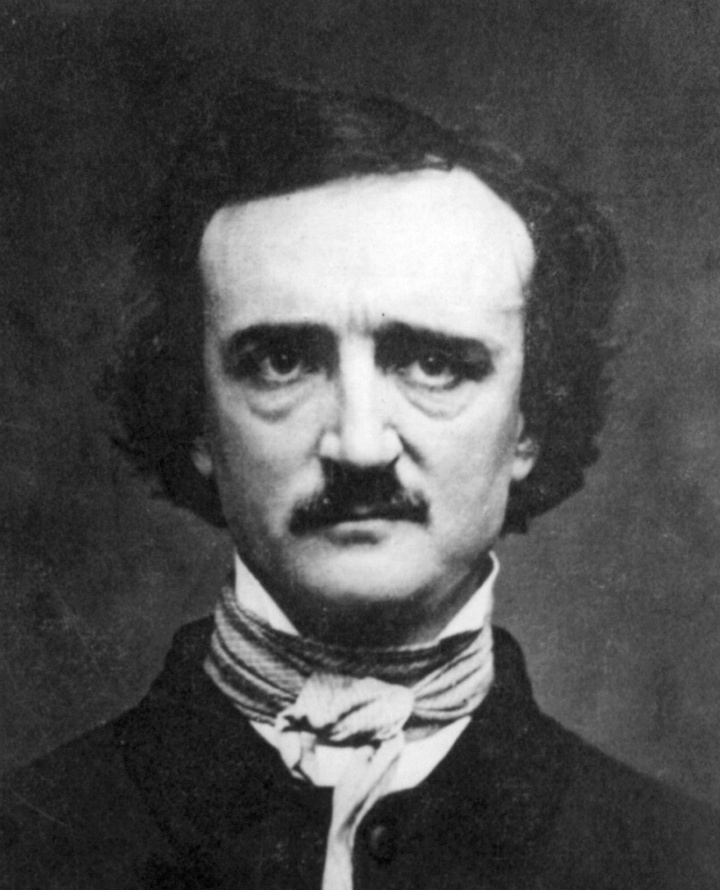
10 Strange Things You Didn't Know About Edgar Allan Poe


  1. By the time he was three he was an orphan. 
  2. Some scholars believe his dad abandoned the family, while others note that he may have died. 
  3. Poe started writing poetry and criticisms at the ripe old age of 13. 
  4. Because of poor money management he only attended college for a semester. 
  5. He joined officer school at West Point Military Academy to pay off gambling debts. 
  6. Soon after, his drinking habits caught up with him and he was kicked out! 
  7. He only turned to writing as a job after becoming desperate for work. 
  8. He married his 13 year old cousin and lived with her for 7 years until she died an untimely death at the hands of tuberculosis. 
  9. Because several of his stories are told from the first person point of view, and because the characters know intimate details of drug use, several critics believe that Poe was pulling from his own personal experiences.
  10. According to myth, he died under mysterious circumstances which many attributed to his heavy use of alcohol. 
Needless to say, Poe's life (and death) was as sad, mysterious, and crazy as his writing.