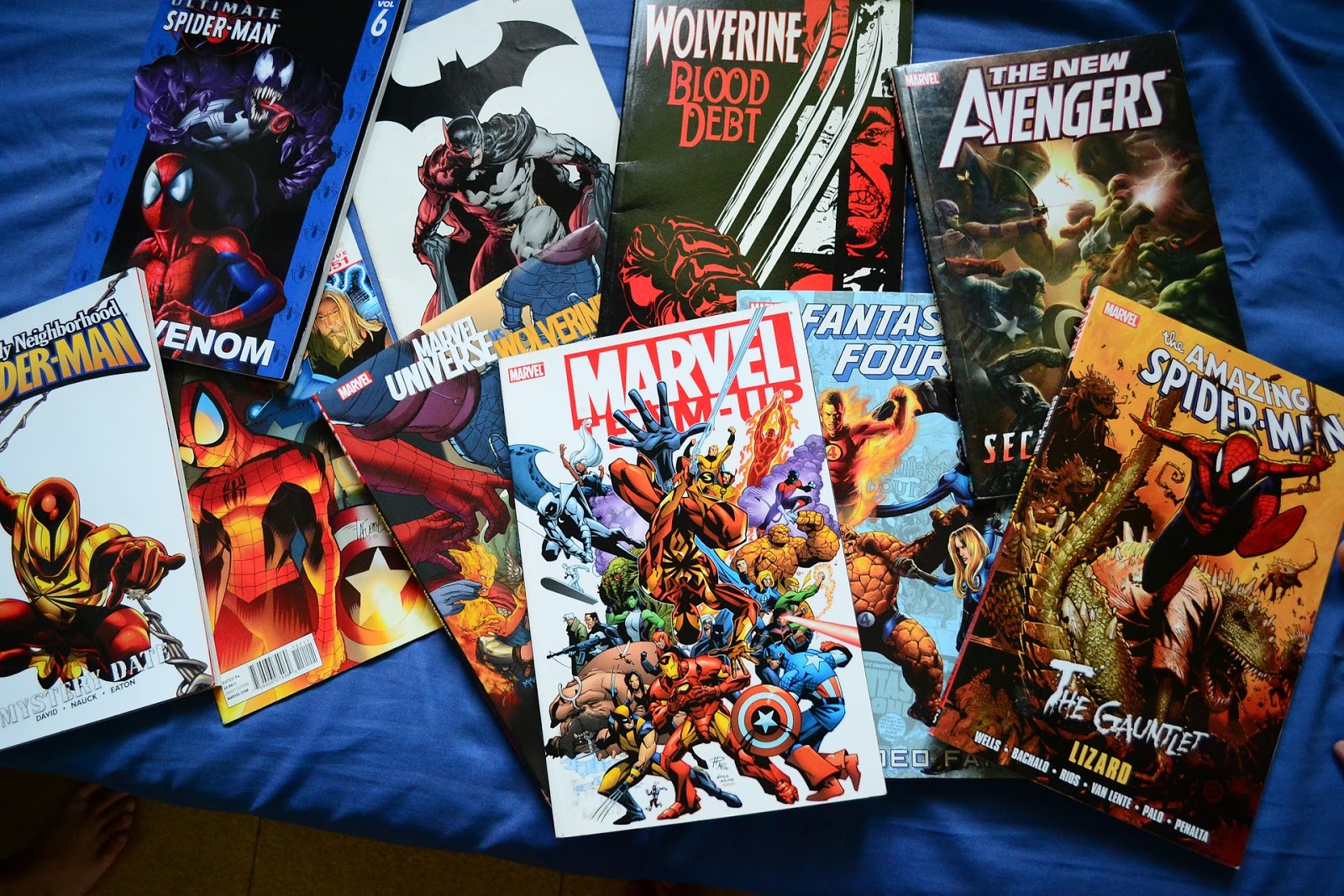
A classmate wrote, "I am not a fan of graphic novels. I love illustrations, but I think they should be limited to the first page of a chapter. Do you think the artwork in a graphic novel tells more of the story than the actual writing? Do you think a graphic novel could be converted into an actual novel, or do you think the pictures are the only things holding the book together? (I hesitate to use the phrase 'actual novel' because it means a graphic novel is not an actual novel, but you get the gist.)"
My response:
To answer your question, I think novels are like ice cream. Some people like vanilla, others like chocolate. If you're a vanilla lover, that doesn't stop other people from eating chocolate ice cream. The same could be said about genre. Many people who like Romance, can't stand Scifi, Fantasy, or Horror (and vice versa). Nevertheless, each of these genre giants have huge followings and are commercially successful. My point is, one man's trash is another man's treasure. As long as people are still buying and reading graphic novels, they will continue to be around.
My response:
To answer your question, I think novels are like ice cream. Some people like vanilla, others like chocolate. If you're a vanilla lover, that doesn't stop other people from eating chocolate ice cream. The same could be said about genre. Many people who like Romance, can't stand Scifi, Fantasy, or Horror (and vice versa). Nevertheless, each of these genre giants have huge followings and are commercially successful. My point is, one man's trash is another man's treasure. As long as people are still buying and reading graphic novels, they will continue to be around.

As for the question, "Do you think the artwork in a graphic novel tells more of the story than the actual writing," everyone knows the old saying, a picture is worth a thousand words. So yes, in that regard, I think there's a good point. The pictures do a great deal of the storytelling in graphic novels.
Can graphic novels be converted to an actual novel?
I think the answer is a resounding yes. Although we see most graphic novels translated into screenplays for movies and TV, it is possible for them to be translated into novels. Generally speaking however, most of the time novels are adapted into graphic novels.
 |
| Batman vs Superman was a film adaptation of a graphic novel. |
What is the purpose of a novel?
The other point to consider is that, at it's core, a novel is about telling a story. The purpose isn't to make people read words, but rather to immerse the audience in a fictional world. This allows them to see through the eyes of the characters, and in someway, learn lessons from the different points of view. In that respect, I don't think it matters whether or not a book has 1000 pictures or none. If the story is told, and the reader engages, then the author did their job.
What do you think? Do graphic novels truly deserve the title novel? If not, why? If so, what is your favorite graphic novel?


